Adjustable Beds · Compatibility Guide
Can an Obasan Organic Bed Flex with a Moving Base?
An adjustable base can lend a bed a new kind of ease: a gentle lift for reading, a raised position for rest, or a flatter profile for sleep. But an organic mattress is not automatically compatible simply because its materials feel pliable. Before pairing an Obasan bed with a moving base, confirm the specific model’s construction, permitted range of motion, support requirements, and warranty terms.
The short answer: verify the exact mattress
Whether an Obasan organic bed can be used on an adjustable base depends on the particular mattress and the manufacturer’s instructions for that model. “Organic” describes material choices or certifications; it does not, by itself, establish that a mattress can bend repeatedly. Likewise, the presence of latex does not guarantee compatibility. Layer thickness, internal assembly, quilting, edge construction, and the way the mattress is intended to rest all matter.
The most reliable approach is to ask Obasan—or the retailer that supplied the mattress—for written guidance covering your exact model and size. Ask whether it is approved for a power-adjustable base, which types of bases are acceptable, and whether there are limits on the angle or frequency of movement. If the answer is unclear, do not treat a general statement about latex or organic materials as a substitute for model-specific approval.
This is less a question of whether a mattress can bend once and more a question of whether its complete structure is designed to flex repeatedly while remaining evenly supported. A bed may appear to move smoothly in a showroom or during an initial test, yet still be unsuitable for regular use on a motorized frame.
First, separate the mattress from the base
The phrase “adjustable mattress” is often used casually, but it can blur two distinct parts of a sleep system. The mattress is the cushioned surface beneath the sleeper. The adjustable base is the powered or manually operated frame that changes the position of the bed, commonly by raising the head, the foot, or both. Compatibility is a relationship between those two components, not a feature that can be inferred from either one in isolation.
On a flat platform, a mattress is supported across a largely level surface. A moving base changes that geometry. As the head or foot section rises, the mattress bends at one or more points, and its layers must move together without excessive bunching, sliding, separation, or strain. The base, meanwhile, must provide the support pattern required by the mattress maker—whether that means a solid deck, closely spaced slats, or another specified foundation.
For an Obasan organic bed, the important question is therefore not simply “Is it latex?” It is: “Is this model’s full construction approved to flex on this kind of base, through the positions I intend to use, while supported as required?” That phrasing helps direct a conversation with customer service toward practical details rather than broad material claims.
Why latex and wool respond differently to movement
Natural latex is resilient and can compress and recover under pressure. That quality makes it comfortable in many mattress designs, but resilience should not be confused with unlimited flexibility. A latex layer’s response depends on its thickness, firmness, shape, and placement within the mattress. A mattress with several layers may also include transitions or a core whose behavior differs from that of the surface material.
Wool can appear in a comfort layer, quilt, or other part of a mattress cover. It adds a distinctive hand feel and can help manage moisture, but it is not the same as a hinged mechanism. When a mattress bends, its cover and internal layers must follow the frame’s movement together. How well that occurs depends on the way the materials are assembled and secured. The material name alone cannot tell you how a specific bed will behave after repeated articulation.
Construction details are particularly relevant at the bend points. A steep head incline may concentrate movement in one area; raising both the head and foot may create a different curve. If a mattress is not designed for those actions, stress can affect how its layers sit, how the cover drapes, and how consistently it is supported. These are reasons to seek the manufacturer’s specifications rather than experiment with a valuable mattress.
Organic certifications, where applicable, address defined material or processing criteria. They do not automatically certify that a mattress is compatible with every adjustable frame, nor do they replace care and warranty guidance. Think of material credentials and mechanical compatibility as separate questions: both may matter to a purchase, but one does not answer the other.
What to ask Obasan before you set up the bed
Make the inquiry specific. Have the mattress model name, size, approximate purchase date, and the adjustable base’s make and model at hand. If you have not selected a base yet, request the mattress requirements first and use them as a filter while comparing frames. A clear written response is useful later if you need to revisit setup instructions or warranty coverage.
- Is this exact mattress model approved for an adjustable base? Ask about the full model and size, not only its latex or wool content.
- Are there restrictions on base design? Confirm whether the mattress requires a particular platform, slat spacing, support surface, or center support.
- What range of movement is permitted? Ask whether both head and foot articulation are allowed and whether any positions should be avoided.
- Does movement affect the warranty? Request the relevant policy language, including any conditions about the foundation, frame, or use.
- Are there setup or care instructions for articulation? For example, the maker may specify how to place the mattress, how to secure it, or whether it should be returned to flat before certain maintenance tasks.
- What signs indicate a problem? Ask what to do if the mattress shifts, bunches, makes unusual sounds, or no longer lies evenly.
When a representative says a model is compatible, follow up with the permitted base type and any limitations. “It should work” is not as useful as a clear statement about support requirements, approved movement, and warranty conditions. If guidance is given by phone, consider asking for confirmation by email or locating the same information in the manufacturer’s published care documents.
Inspect the moving base as carefully as the mattress
A compatible mattress still needs a suitable foundation. Adjustable bases vary in deck design, dimensions, lift capacity, leg configuration, and available movement. Before purchase, check that the base is correctly sized for the mattress and that it can support the combined load of the mattress, bedding, and sleepers within its stated capacity. Also verify that the chosen configuration fits the room and any existing bed frame.
Look closely at how the frame supports the mattress when flat and when raised. The deck should provide the type and distribution of support the mattress manufacturer requires. If the bed is placed inside an existing frame, confirm that the adjustable mechanism can move freely and that no rails, drawers, headboards, or footboards obstruct it. A frame that looks right when stationary may not leave enough clearance for the moving sections.
Leg height and overall bed height deserve practical attention, too. Raising a mattress changes how the room is used: access to bedside tables may shift, the bed may approach a headboard differently, and nearby walls or furniture can become obstacles. For split configurations, consider whether each side moves independently and whether the mattress design is intended for that arrangement. Do not assume a split base is appropriate for a single, uninterrupted mattress unless the manufacturers confirm it.
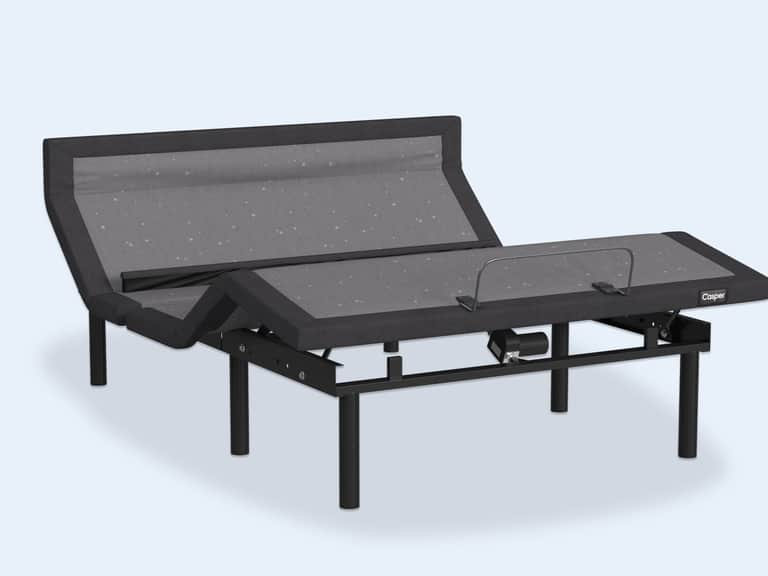
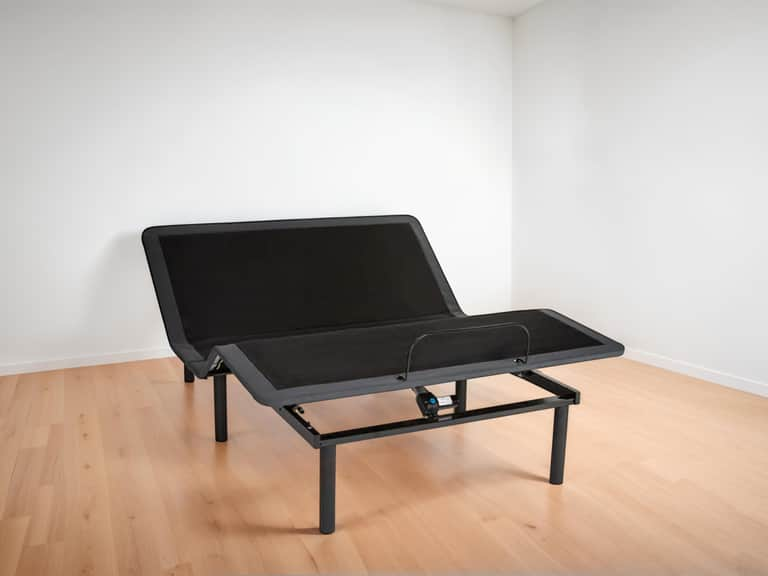
One example of a powered option is The Clean Bedroom Level 1 Adjustable Bed Base. Its product information lists independent head and foot lift, adjustable leg heights, a wireless remote, and a 750-pound lift capacity. Those specifications describe the base; they do not establish that an Obasan mattress is approved for use with it. Confirm the mattress requirements, base dimensions, and combined-load suitability before treating any adjustable frame as a match.
Compatibility is about the whole sleep system
Even when a mattress and base are individually well made, the result depends on how they work together. A mattress might be approved for an adjustable platform but require a particular support surface. A base might offer a wide range of movement but still be unsuitable for a mattress that has different support or bending limits. The bed frame, mattress, base, bedding, and room layout all contribute to a successful setup.
Fitted sheets and mattress protectors can also affect how the bed behaves. Deep pockets and flexible fabrics are generally easier to accommodate than tight layers that pull across the surface, but fit varies by product. Avoid securing bedding in a way that restricts movement or places tension on the mattress as the base articulates. If the mattress shifts or a fitted sheet pulls free, stop and check the setup rather than increasing the angle.
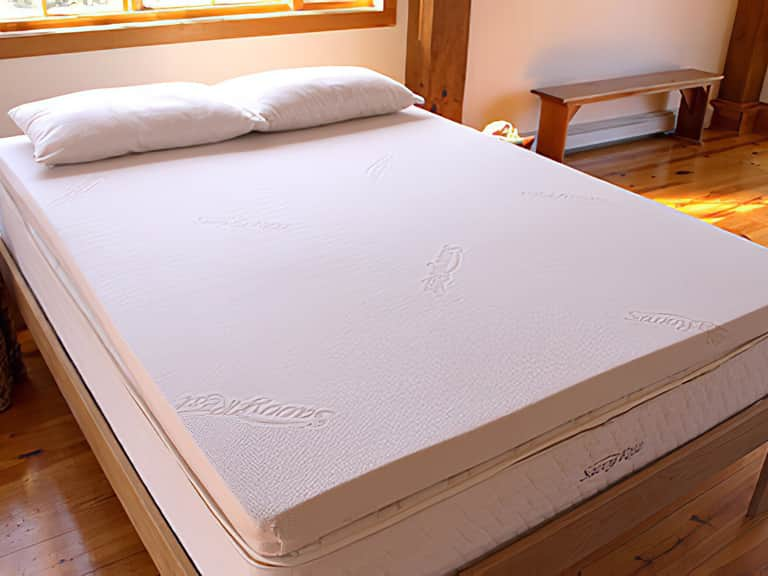
Added toppers are another variable. A separate latex topper, for instance, has its own thickness, cover, and movement characteristics. It may alter the way the full surface drapes over a bend, even when the underlying mattress is approved for an adjustable base. Ask both manufacturers if the topper and mattress can be used together on the intended frame. Compatibility approval for one component should not be assumed to extend automatically to every accessory.
A careful setup, step by step
- Confirm written approval. Check the exact mattress model’s care guide or contact the manufacturer before placing it on a moving base.
- Read both manuals. Compare the mattress support requirements with the adjustable base’s deck, dimensions, and operating instructions.
- Prepare the frame. Make sure the base is assembled on a stable surface, has adequate clearance, and is positioned as its maker directs.
- Place the mattress evenly. Center it on the platform and follow any instructions about retainers or mattress stops. Do not improvise fasteners that could damage the cover.
- Test movement gradually. With the bed unoccupied, use modest movement first and observe whether the mattress remains centered and evenly supported. Follow the base manufacturer’s safety instructions throughout.
- Inspect after lowering. Return the base to flat and check for bunching, shifting, unusual gaps, or changes in the mattress’s appearance. If anything seems wrong, stop using the movement feature and seek guidance.
Routine checks can help you notice a developing issue early. Listen for unusual sounds from the base, look for signs that the mattress is migrating, and confirm that cables and moving parts remain unobstructed. Keep children, pets, and loose objects clear of the mechanism while it operates, and use any safety locks or controls in the manner described by the base maker.
Warranty and care deserve a close read
Warranty coverage is not a decorative footnote; it is part of the compatibility decision. Mattress warranties commonly specify acceptable foundations or support conditions, while adjustable-base warranties cover the mechanism under separate terms. The two documents may use different definitions and exclusions. Read each one before use, especially if the mattress is new, the base is being added later, or the original foundation is being replaced.
Keep purchase records, model details, and the manufacturer’s written compatibility guidance together. Follow care instructions for rotating, moving, or cleaning the mattress, and avoid lifting it by a feature that the maker says should not bear its weight. If an issue appears, document what you notice and contact the relevant manufacturer before attempting a repair or continuing to operate the bed in a position that may aggravate it.
Do not assume that a problem is covered—or excluded—based on general online advice. The applicable policy depends on the product, its age, the support system, and the circumstances. The manufacturer’s current written terms are the appropriate source for a decision about coverage.
If the model is not approved for a moving base
If Obasan does not approve your mattress for an adjustable frame, the safest course is to use a foundation that meets the mattress maker’s requirements. A desire for elevated positioning does not make an unapproved setup advisable. Repeated bending can place stress on the mattress and may conflict with care or warranty instructions, even when the bed seems to perform normally at first.
If adjustability is essential, consider the decision before buying the mattress rather than after delivery. Ask the manufacturer which models, if any, are designed for moving bases, and compare that guidance with the features you want. If you already own the mattress, discuss alternatives with the seller or manufacturer before purchasing equipment. A clear answer may help you avoid a costly mismatch and preserve the support conditions intended for the bed.
There may also be non-mechanical ways to refine a sleep setup, depending on your needs: a suitable pillow, a different flat foundation that meets the mattress specifications, or adjustments to room arrangement and bedding. These are not substitutes for medical advice. If you are considering elevation because of a health concern, ask a qualified healthcare professional what positioning is appropriate for you.
A practical decision checklist
Before pairing an Obasan organic bed with an adjustable base, make sure you can answer these questions confidently:
- Do I know the exact Obasan model and size?
- Has the manufacturer confirmed that this specific mattress can be used on an adjustable base?
- Do I know which base designs, support surfaces, and movement limits are permitted?
- Have I checked the adjustable base’s dimensions, capacity, assembly instructions, and clearance needs?
- Have I reviewed both warranties and retained any written compatibility guidance?
- Have I considered how sheets, protectors, toppers, and an existing bed frame may affect movement?
- Do I know how to stop using the base and whom to contact if the mattress shifts or appears uneven?
If any answer is uncertain, pause before operating the setup. A few precise questions can establish whether the mattress, frame, and intended positions are compatible without relying on guesswork.
The considered answer
An Obasan organic bed may or may not flex safely with a moving base; the answer belongs to the specifications for the particular model. Latex’s resilience and wool’s presence can help describe the materials, but neither provides a blanket guarantee of adjustable-base compatibility. Construction, support, range of motion, setup, and warranty conditions complete the picture.
Approach the pairing as a coordinated system, not a style choice. Confirm the mattress maker’s guidance, match the base to its support requirements, and test the installation cautiously within the instructions provided. When those details align, adjustability can be considered with greater confidence. When they do not—or when the answer remains uncertain—a flat foundation approved for the mattress is the more prudent choice.